
Matt Robinson
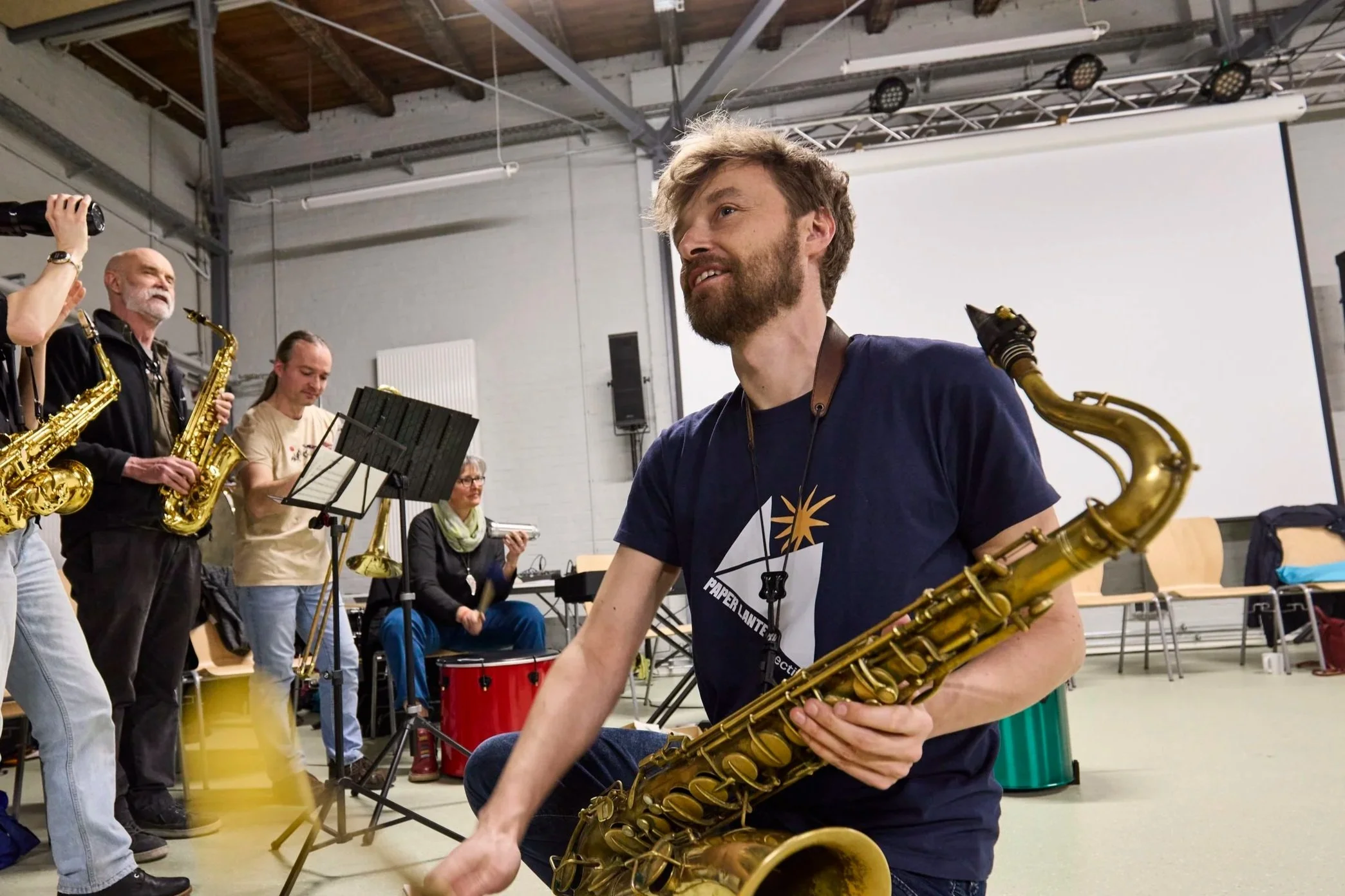
Co-CEO & Artistic Director
(he/him) (en, de)
Matt Robinson built the first Community Music programme inside a German classical music institution — at Konzerthaus Dortmund, reaching over 15,000 participants a year — and co-founded Paper Lantern Collective. Over nearly twenty years his work has shaped Community Music practice across Germany, the UK, Hong Kong and Norway.
He works in a specific lineage: Welfare State International, More Music Morecambe, and more... — a British tradition of long-haul, place-based, community-led artmaking that sits at the root of contemporary Community Music practice. His own route in began as a teenager in Morecambe, playing with Baybeat Streetband under Pete Moser. It's the moment he learned that another world was possible, and it remains the foundation of everything he has built since.
Matt trained as a jazz clarinettist at Leeds Conservatoire winning the Ernest H. Morris Prize for Community Music and founded Lancaster Jazz Festival as part of the Northern England jazz scene before moving to Germany in 2019. At Konzerthaus Dortmund he developed landmark participatory and community works, including a re-arrangement of Beethoven's Ninth with Stegreif Orchester and a Community Symphony of 300 non-professional artists. Internationally, he helped establish the first Community Music projects in Hong Kong with the British Council, worked long-term with Vestnorsk Jazzsenter and advised the Norwegian Ministry of Culture.
Matt is Co-Chair of Community Music Netzwerk Deutschland, the national field body, and was central to the design of Germany's first Community Music Certificate, through which he has mentored over thirty emerging Community Musicians across the DACH region. He teaches at Hochschule Düsseldorf and Universität Eichstätt-Ingolstadt. He writes and speaks internationally on the politics of participation and the development of Community Music and remains a working musician on tenor saxophone and clarinet.
Matt believes Community Music is a rights-based practice, not an outreach strategy, and that cultural institutions exist to serve their communities, not the other way round.