
Community Music: what remains
Matt - In 1983, Welfare State International started the Ulverston Lantern Parade. A new tradition of handmade lanterns made of willow, super fragile paper, and fire. They built it with the community, year after year, and then in 2006, they disbanded. Ulverston Lantern Festival still happens and that’s the whole point.
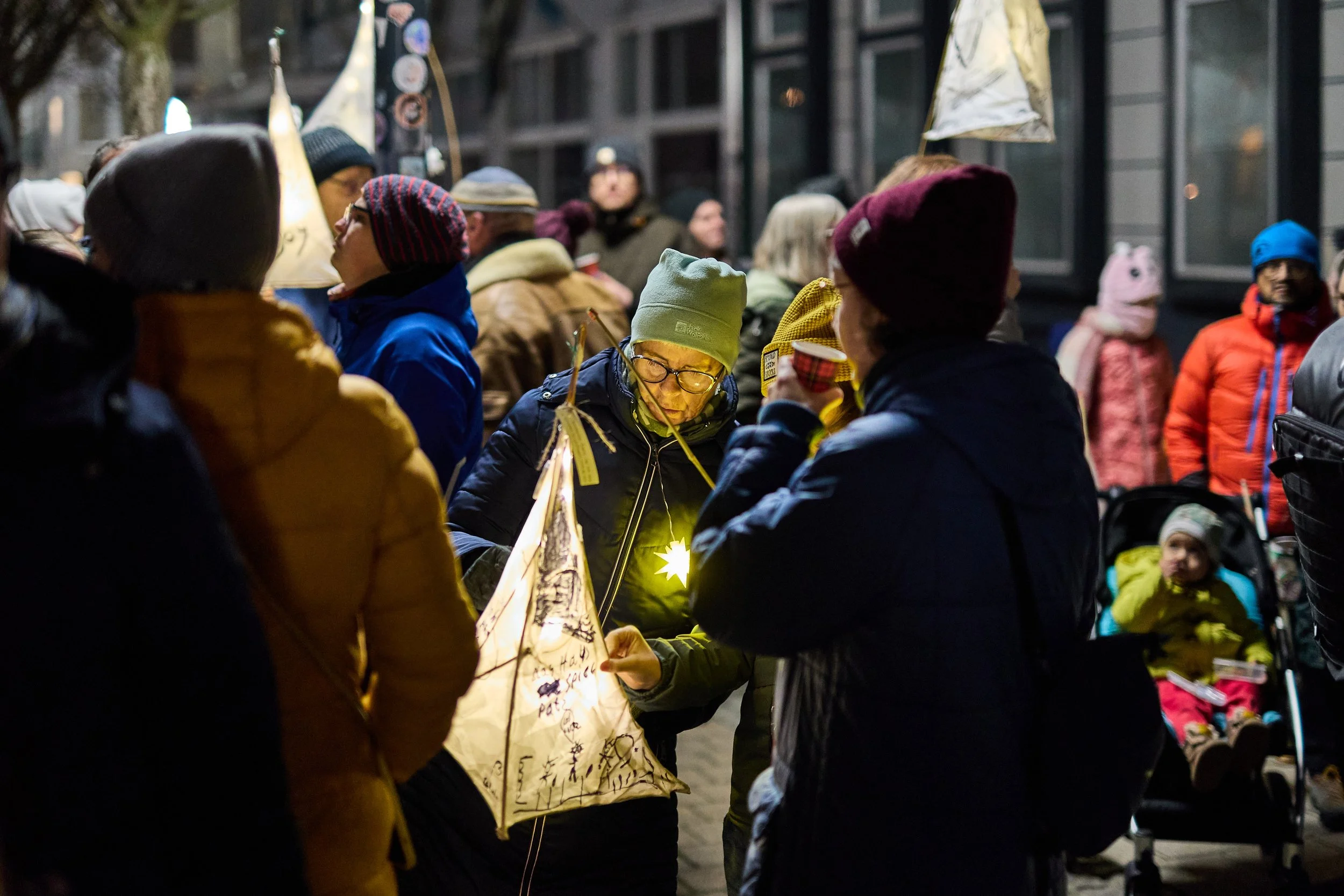
Chemnitz Lantern Parade 2025 © Jan Felber
Last year, a young non-professional artist in one of projects said something I haven’t been able to put down:
Heute bin ich jemand. Morgen bin ich wieder niemand. (Today I am someone. Tomorrow I will be nobody again.)
The world still tells them that. Despite the project. Despite everything. But this is not a failure of the work, it is the work telling the truth about what it is up against and it is the clearest statement I know of what the demand actually is: how do we make something collectively that lasts more than just today?
How do you build something that holds the person when the professional is not in the room? When the funding runs out? When the organisation is gone?
Permanence. Working so deeply rooted in communities that the community ultimately doesn’t need the professional at all.
Community Music is practically still arriving in the German speaking world.
There are two completely different practices operating here under the same name. One is built around the non-professional artist’s capacity. The other uses the non-professional artist (the participant) as the medium, the material through which the professional tells their story, builds their platform, earns their reputation. The community receives the work. The professional or the institution remains the author.
Both can be done with genuine commitment. Both can be done by talented people who mean every word they say. But they are not the same thing. They do not produce the same outcomes. And when we call both things the same thing, it is not us who pays the price.
One of these things is not Community Music.
Now, we made a film about this work thing that we do. It’s here.
And you could read that statement as exactly what I’m describing above, i.e. using the community to build our platform. But I’d encourage you to watch it. The non-professional artists that we work with watched it with us in a brilliant open workshop in Sonnenberg and cried and laughed with us. This truth and reality is the only review that matters.
The question is not who delivers the programme. It’s not really even a question of how, despite the ever present question of “what is CM?”. The question is: who holds the knowledge at the end? Could they run it next week without you? Does the art belong to the institution, to the professional, or to the community?
WSI didn’t visit Ulverston. They lived there and they worked there. Then they left. And the tradition and the parade continued.
François Matarasso defines Community Art as professional and non-professional artists making work together on the basis of equality. Not expertise flowing downward. Not the professional as the author and the community as a medium. Equality. Both parties changed. Both making something together that neither could make alone.
We, at Paper Lantern Collective, are here in Sonnenberg-Chemnitz to plant something that will still be going and even more brilliant when we’re inevitably gone. In service to this place and the people, never the other way around.
See you on the street!