
Training in Social/Cultural Institutions & Colleges
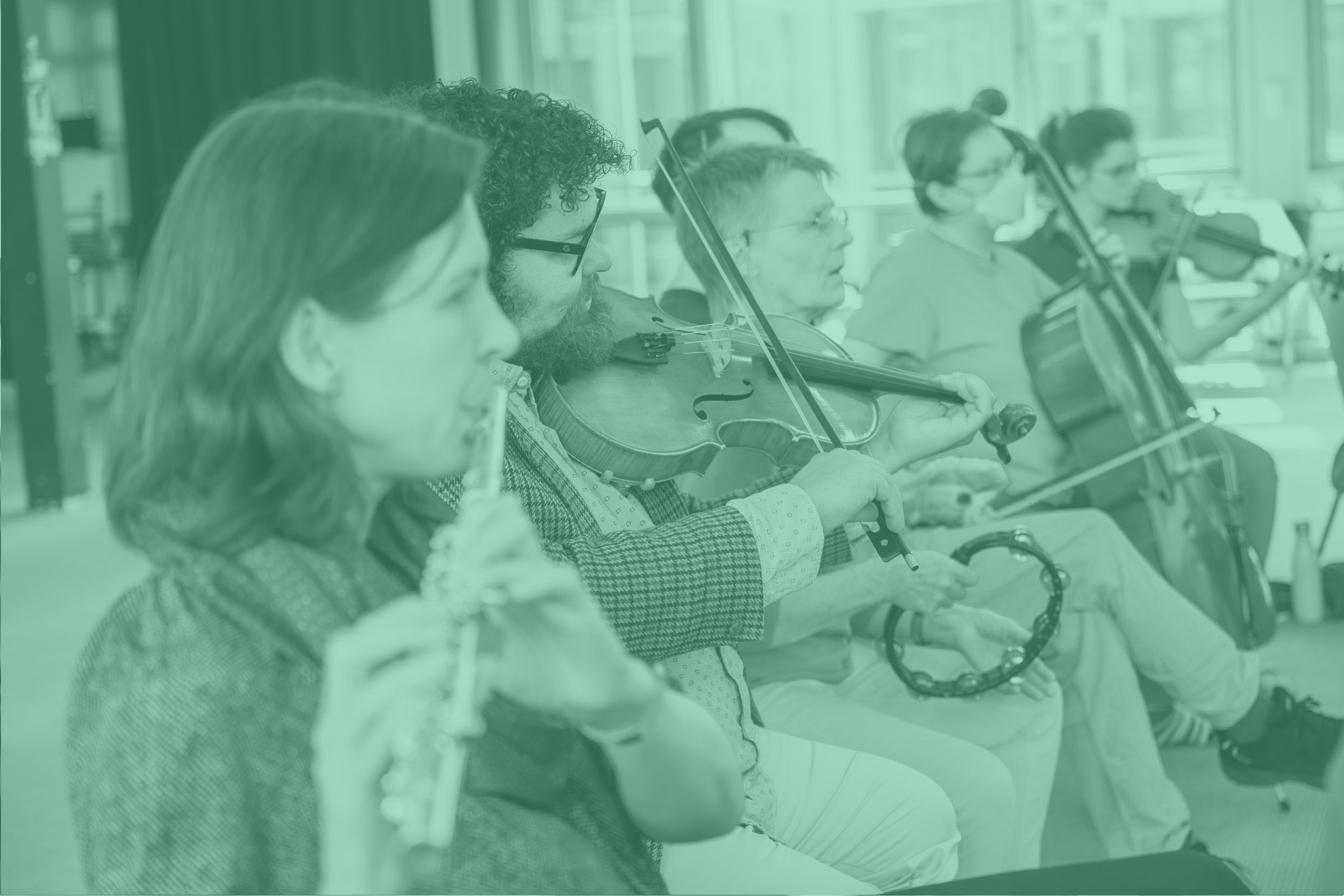
Tailored trainings and supported delivery in your own settings across a cohort, class, or staff team
Who it’s for
Social work schools, training providers, education institutions, cultural organisations, and partner organisations developing staff capability for participatory work.
Primary participants are:
Students / trainees in social work and adjacent fields (youth work, community work, education support).
Institutional staff / educators who supervise learning and want participatory music methods embedded in their programme.
In some cases: partner organisations’ staff teams who want to build a shared method set internally (rather than sending individuals to open trainings).
This format is particularly suited to cohorts who:
already have a structured timetable and cohort identity,
have access to placement/group contexts,
benefit from learning as a group (shared language, shared practice, shared standards).
Partners provide:
PLC: delivery of modules, facilitation toolkit, practice framework, coaching/feedback, evaluation templates, quality assurance.
Institution: cohort recruitment, scheduling within curriculum/timetable, provision of rooms, access to practice contexts (placements/groups), pastoral support structures.
How it works
This pathway consists of 9 modules of approx. 3 hours each.
This is split between:
Community Musician Basic Training (5 modules)
Basic Training Plus (supported practice) (4 modules including work in community settings)
This is designed around your structure. Training can be delivered in block days or split sessions, with a supported practice phase integrated into your timetable.
What you will learn
By the end of Community Musician Basic Training, participants will be able to:
Explain Community Music practice clearly (and accurately). Describing what Community Music is (and isn’t), including participation vs community, ethics, power, and boundaries.
Set up and run a participatory music-making activity in a workshop setting that is safe, inclusive, and workable. Able to prepare an activity practically (space, materials, timing, transitions) and safely.
Read and respond to group dynamics in the moment. Recognising common patterns (confidence gaps, resistance, dominance, disengagement, chaos) and making basic facilitation choices that keep the group moving.
Lead effective warm-ups and create a strong start. Using a warm-up toolkit (body/voice/rhythm/listening/play) to build trust, activate participation, and adapt activities for mixed abilities.
Facilitate participatory music-making with clear musical leadership. Leading musically using simple structures (call-and-response, cues, layering, grooves) that support inclusion and musical quality.
Co-create new material with groups. Using accessible composition and improvisation frameworks to generate lyrics/rhythms/melodies with participants, supporting shared ownership and agency.
Plan a participatory music-making activity and evaluate it realistically. Produce a simple plan and use basic evaluation methods to reflect, learn, and evidence impact without turning the work into paperwork theatre.
Identify appropriate next steps in the PLC development pathway. Decide whether to embed learning in existing work, progress into Basic Plus/mentoring, or pursue other routes (e.g., fellowship / external certificate options) based on readiness and context.
By the end of Basic Training Plus (supported practice), participants will be able to:
Translate training into practice: plan and lead participatory music activities in a real group context.
Hold a room safely: manage basic group dynamics and keep inclusion central while maintaining musical momentum.
Lead musically with confidence: use simple structures (warm-ups, call-and-response, layering, co-creation prompts) without becoming controlling.
Work reflectively: use feedback from PLC/peers to improve a second delivery cycle.
Use basic evaluation tools: document what happened, what changed, what was learned.
Identify next steps: decide whether they are ready for deeper mentoring / traineeship routes (project-based, institutional track, fellowship pipeline) or need further consolidation.
Interested? Contact Matt Robinson to find out more